
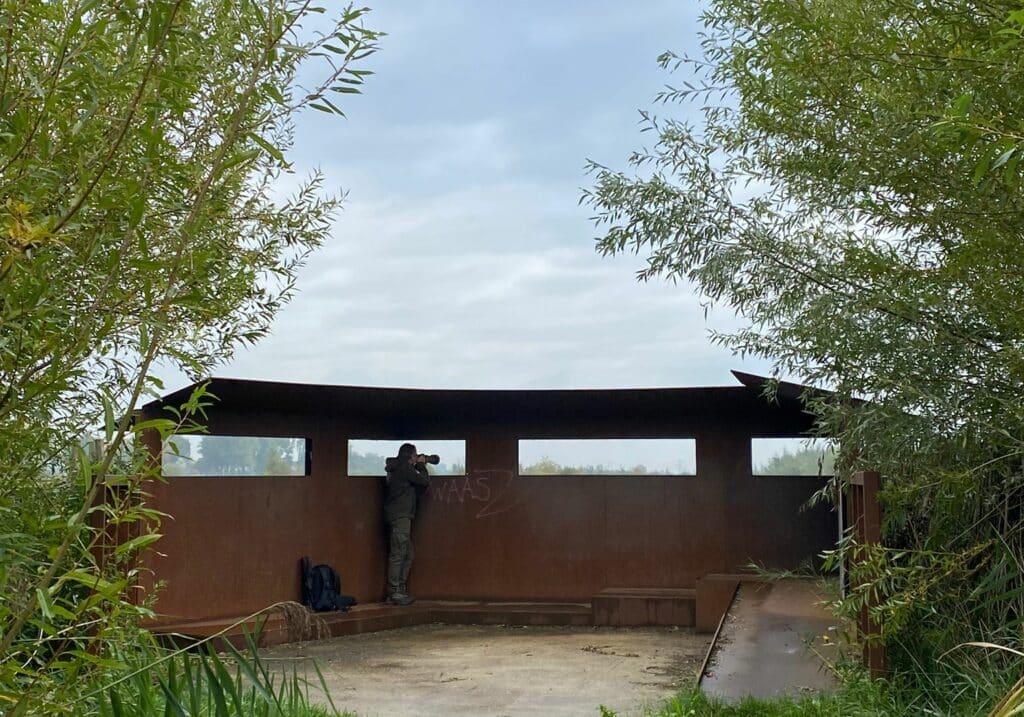
Start of the hike
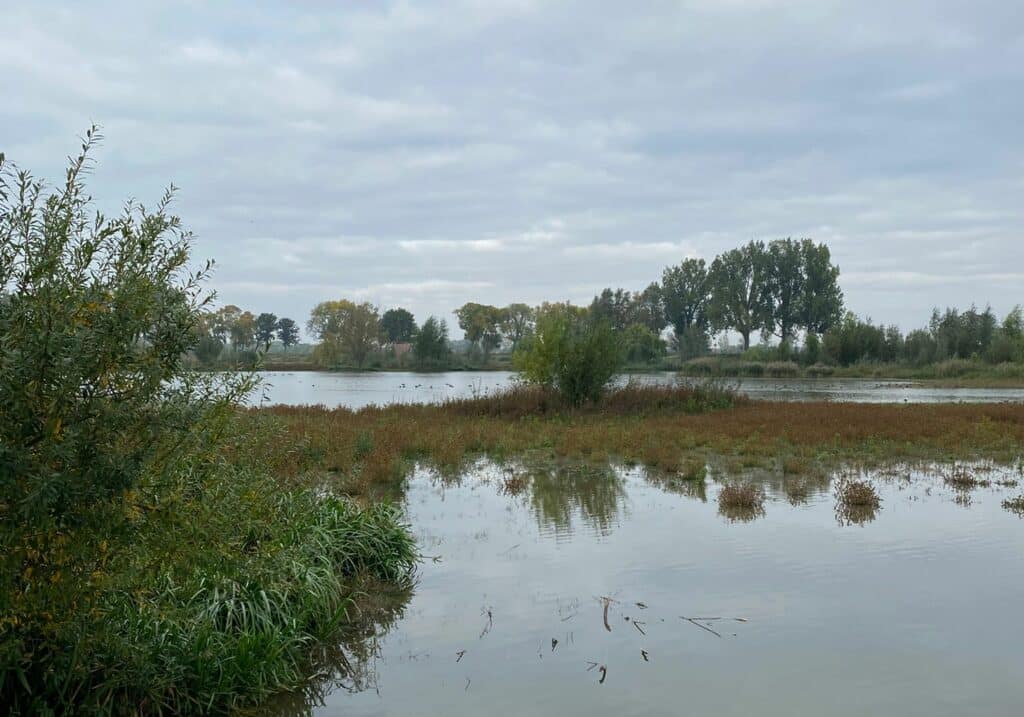
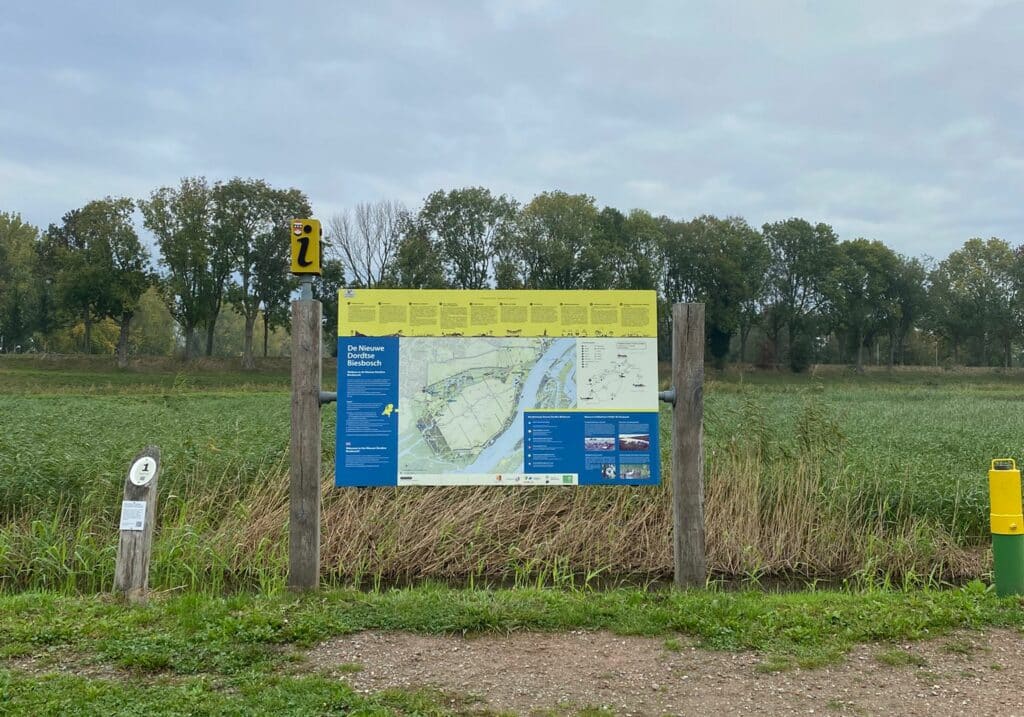
We'll start at the parking lot on Oude Veerweg. From the map board, walk onto the path and follow it all the way to the lookout point by the water. Here, you’ll immediately be treated to a stunning panoramic view of the new polder landscape. Look around and take note: the Dutch skies are reflected in the water, and with a little luck, you’ll already spot your first birds.
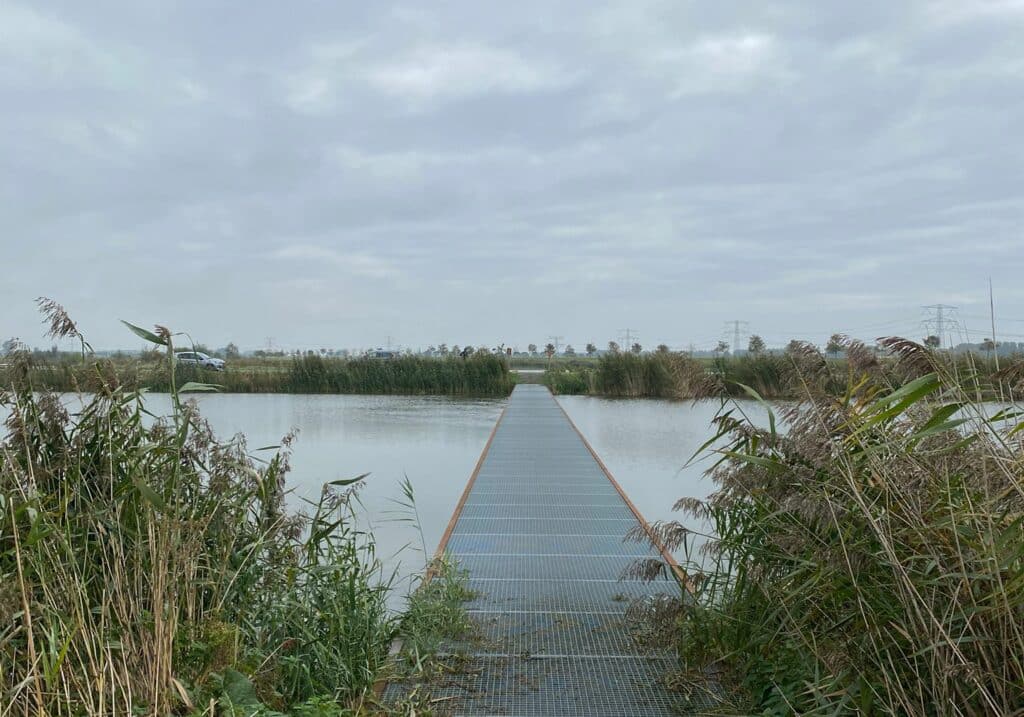
Zuidbuitenpoldersekade
From the lookout point, walk back to the intersection and turn left. Follow this path, then turn left again onto Zuidbuitenpoldersekade . Walk on the left side of the dike and follow it until the first left turn. Here, a small path with a boardwalk begins. If you walk all the way to the end—past the boardwalk on your right—you’ll come to another birdwatching hut.
From the birdwatching blind, you’ll have a chance to spot the Cetti’s warbler . It’s a small bird, but with an explosive song: ti-CET-ti-CET-ti! Once rare, it is now a permanent resident of the Biesbosch.
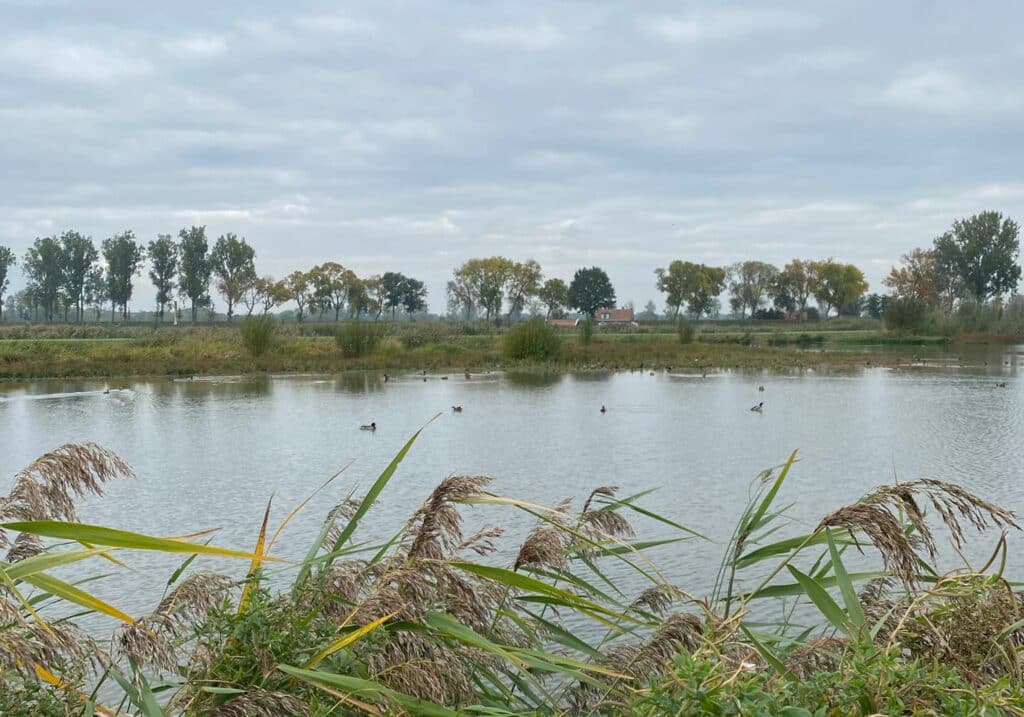
Boardwalk Paths
Then walk back a short distance and continue along the boardwalk. Here, you’ll literally be walking above the water. Cross the Van Elzelingenweg (road) and continue along the boardwalks. This is perhaps the most beautiful part of the route: all around you, you’ll see open water, reed beds, and wet meadows. You’ll discover something new here every season.
Keep an eye out for the blue-throated robin, which returns from Africa starting in March. With its bright blue breast and powerful song, it is one of the most beautiful birds in the Biesbosch.
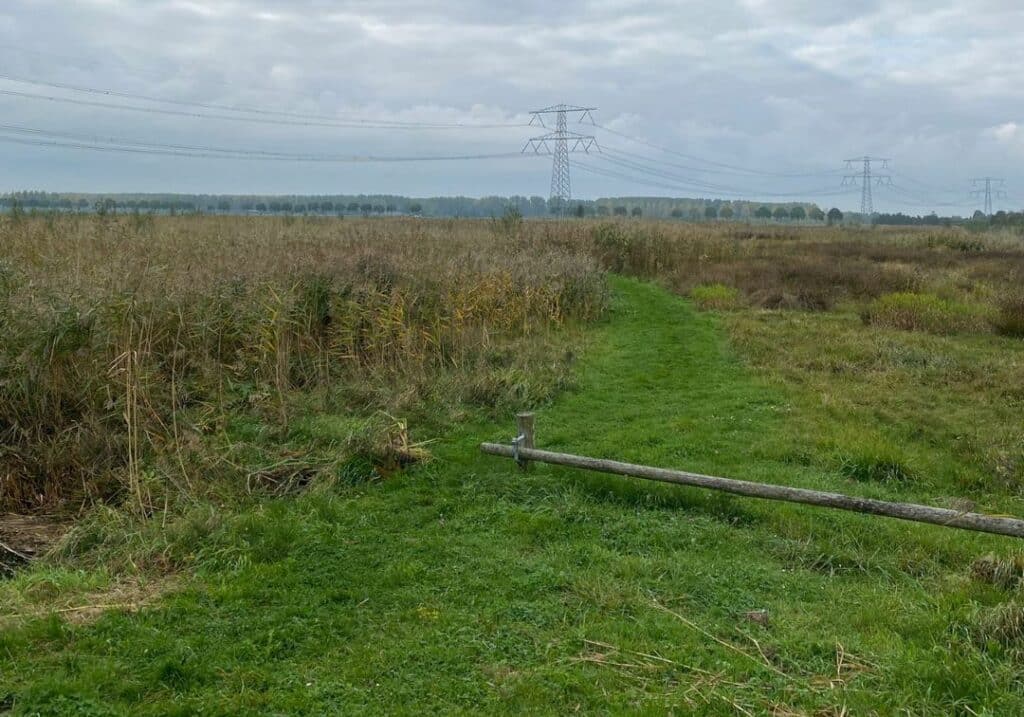
Van Elzelingenweg
At the end of the boardwalk, you'll come out again onto the Zuidbuitenpoldersekade. Follow it back to the intersection with the highway—the Van Elzelingenweg.
Turn left there turn left onto the highway. Take the first right at the horizontal wooden beam. A footpath cuts straight through the polder. Follow this path until you reach Zwanenplaatweg— the first small road.Do not cross the stream here; instead, turn right and walk to the intersection.
Keep your eyes peeled for the great egret. This elegant white bird has become much more common over the past twenty years. They are especially numerous in the winter: sometimes as many as hundreds at a time. An impressive sight!
Zwanenplaatweg
Don't cross the stream; instead, turn right onto Zwanenplaatweg and walk to the intersection.
Did you know that during the mobilization of 1939–1940, the Dutch army built about 60 group shelters—that is, bunkers—in the Biesbosch? Some of those bunkers have now been converted into bat roosts. In this way, the history of the war is given a new lease on life here in nature.
Last section – back to P1
Follow Zwanenplaatweg until the intersectionatwith the Zuidpoldersekade. After the curve, turn left, cross the dike, go down the small flight of steps, and walk a short distance along the familiar path from the way there. Then turn left almost immediately onto the small boardwalk —across the ditch. You can follow this path all the way back to the parking lot (keep to the right). Prefer a shorter route? Then take the first path on the right that cuts through.And then we’re back at the parking lot.