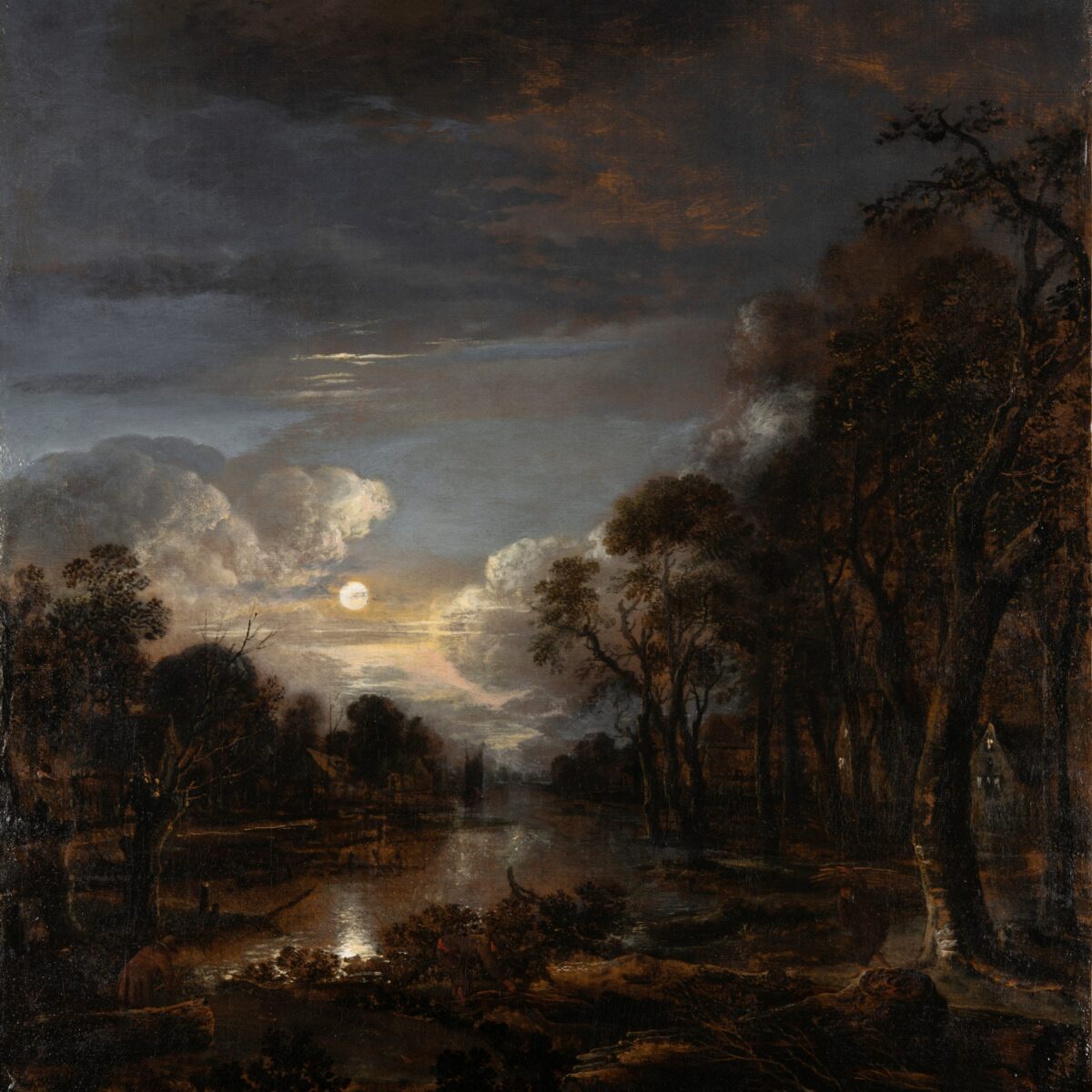
Stefan Kuiper, guest curator of the exhibition *From Dusk Till Dawn*, discusses moonlight, imagery, and the significance of the moon in the seventeenth century.
How did people in the seventeenth century view the moon? In this lecture, Stefan Kuiper explores the special place the moon occupied in everyday life, religion, and the imagination of the early modern era. What significance did people attribute to this celestial body? What stories, beliefs, and expectations were associated with it? And to what extent does that differ from how we view the moon today?
Using art, historical sources, and cultural narratives, Kuiper shows how the moon has been viewed and depicted throughout the centuries. From moonlit landscapes to folklore and science: what does the moon tell us about the world of the past?
The lecture ties in with the themes of *From Dusk Till Dawn*, in which visitors are introduced to a time when starry skies, moonlight, and darkness were a natural part of everyday life.
About Stefan Kuiper
Stefan Kuiper is an art historian, journalist, and guest curator of *From Dusk Till Dawn*. For this exhibition, he conducted research on the representation and experience of night in the seventeenth century.